As a supplier of motor plastic parts, ensuring the quality and performance of our products is of utmost importance. One critical aspect of evaluating motor plastic parts is testing their elasticity. Elasticity is a fundamental property that determines how well a plastic part can deform under stress and return to its original shape. In this blog post, I’ll share some insights on how to test the elasticity of motor plastic parts, drawing from my experience in the industry. Motor Plastic Parts

Understanding Elasticity in Motor Plastic Parts
Before delving into the testing methods, it’s essential to understand what elasticity means in the context of motor plastic parts. Elasticity refers to the ability of a material to deform under an applied force and then return to its original shape once the force is removed. For motor plastic parts, this property is crucial as they often experience various mechanical stresses during operation, such as vibrations, impacts, and temperature changes. A part with good elasticity can withstand these stresses without permanent deformation, ensuring the long – term functionality of the motor.
Factors Affecting Elasticity
Several factors can influence the elasticity of motor plastic parts. The type of plastic material used is a primary factor. Different plastics, such as polycarbonate, acrylonitrile butadiene styrene (ABS), and polyethylene, have different elastic properties. For example, polycarbonate is known for its high impact resistance and good elasticity, while polyethylene is more flexible but may have lower strength.
The manufacturing process also plays a significant role. Injection molding, for instance, can affect the molecular structure of the plastic, which in turn impacts its elasticity. Parameters like injection speed, temperature, and pressure during molding can cause variations in the final product’s properties.
Testing Methods for Elasticity
Tensile Testing
Tensile testing is one of the most common methods for testing the elasticity of motor plastic parts. In this test, a sample of the plastic part is clamped at both ends and pulled at a constant rate until it breaks. During the test, the force applied and the corresponding elongation of the sample are measured.
The stress – strain curve obtained from the tensile test provides valuable information about the elasticity of the material. The elastic modulus, which is the slope of the linear part of the stress – strain curve, represents the material’s stiffness. A higher elastic modulus indicates a stiffer material, while a lower modulus means the material is more flexible.
To perform a tensile test, you will need a tensile testing machine. The sample should be prepared according to the relevant standards, such as ASTM D638. The dimensions of the sample, including its length, width, and thickness, should be accurately measured before the test. The test is usually conducted at a specific temperature and humidity to ensure consistent results.
Flexural Testing
Flexural testing is another important method for evaluating the elasticity of motor plastic parts. This test measures the ability of a plastic part to resist bending. A sample is placed on two supports and a load is applied at the center of the sample until it breaks or reaches a specified deflection.
The flexural strength and modulus can be calculated from the test results. The flexural modulus is similar to the elastic modulus in tensile testing and provides information about the material’s stiffness in bending. Flexural testing is particularly useful for motor plastic parts that are subjected to bending forces during operation, such as brackets or covers.
Impact Testing
Impact testing assesses the ability of a plastic part to withstand sudden impacts. There are several types of impact tests, such as the Charpy and Izod tests. In these tests, a pendulum strikes a notched or unnotched sample, and the energy absorbed by the sample during the impact is measured.
A higher impact energy indicates that the plastic part has better toughness and elasticity. Impact testing is crucial for motor plastic parts that may be exposed to impacts during installation, transportation, or normal operation.
Importance of Accurate Testing
Accurate testing of the elasticity of motor plastic parts is vital for several reasons. Firstly, it ensures that the parts meet the required quality standards. By knowing the elastic properties of the plastic parts, we can guarantee that they will perform as expected in the motor.
Secondly, accurate testing helps in product development. We can use the test results to select the most suitable plastic materials and manufacturing processes for different motor applications. For example, if a motor requires parts with high elasticity to withstand vibrations, we can choose a plastic material with a lower elastic modulus.
Thirdly, it enhances customer satisfaction. When our customers receive motor plastic parts with reliable elasticity, they can trust that the motors will operate smoothly and have a longer lifespan.
Quality Control in Elasticity Testing
To ensure the accuracy and reliability of elasticity testing, a strict quality control system should be in place. This includes regular calibration of testing equipment, proper sample preparation, and trained personnel to conduct the tests.
The testing environment should also be carefully controlled. Temperature and humidity can significantly affect the elastic properties of plastic materials. Therefore, the tests should be conducted in a controlled environment to minimize the influence of these factors.
Conclusion
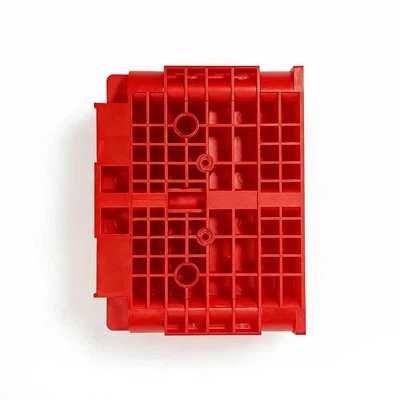
Testing the elasticity of motor plastic parts is a crucial step in ensuring the quality and performance of our products. By using methods such as tensile testing, flexural testing, and impact testing, we can accurately evaluate the elastic properties of the plastic parts.
Plastic Parts As a supplier of motor plastic parts, we are committed to providing high – quality products that meet the specific needs of our customers. If you are in the market for motor plastic parts and want to discuss your requirements, we would be more than happy to engage in a procurement discussion. Our team of experts can provide you with detailed information about our products and how they can meet your motor’s performance requirements.
References
- ASTM International. ASTM D638 – 14e1, Standard Test Method for Tensile Properties of Plastics.
- ISO 178:2019, Plastics – Determination of flexural properties.
- ISO 179 – 1:2010, Plastics – Determination of Charpy impact properties – Part 1: Non – instrumented impact tests.
Deqing Fengcheng Plastic Products Co., Ltd.
With abundant experience, we are one of the most professional motor plastic parts manufacturers and suppliers in China. We warmly welcome you to wholesale bulk customized motor plastic parts from our factory. If you have any enquiry about free sample, please feel free to email us.
Address: No. 18, Yanhe West Road, Yuyue Town, Deqing County, Huzhou City, Zhejiang Province
E-mail: super_fetching@163.com
WebSite: https://www.funchim.com/
