If you’ve walked around a commercial construction site, a farm field, or a material handling yard lately, you’ve probably noticed something quiet but game-changing: industrial vehicles aren’t just clunky, heavy machines anymore. They’re starting to look a lot like the passenger cars and SUVs that roll off assembly lines every day, and that evolution isn’t just about touchscreens or electric powertrains. It’s in the tiny, unassuming parts that keep thousands of signals and watts moving every second: connectors. Automotive TPA Or ISL Connector
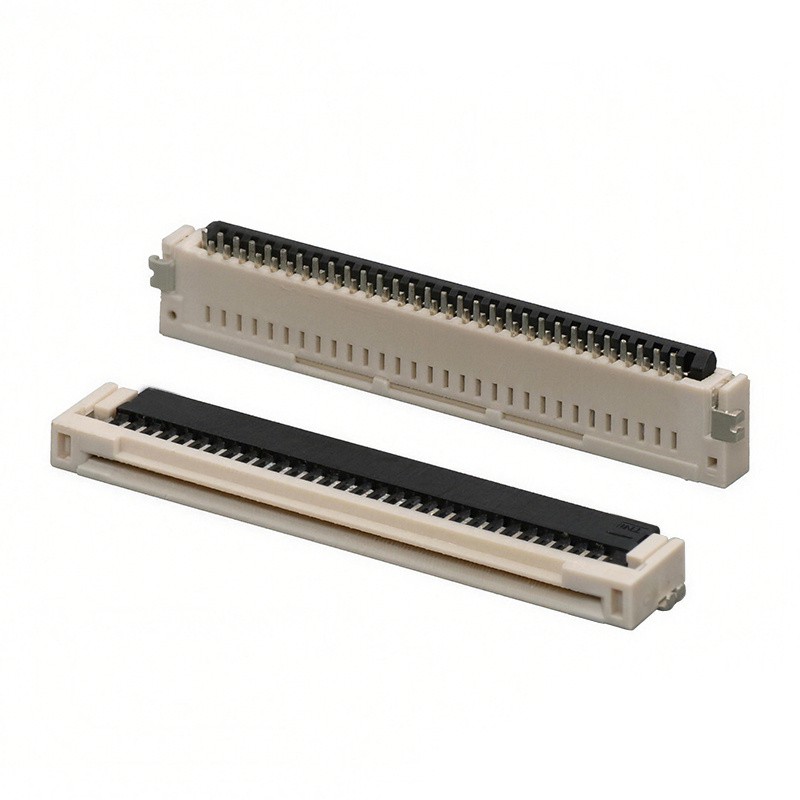
As someone who’s spent the last 12 years as an automotive TPA and ISL connector supplier, I get asked this question at least three times a week: Can these automotive-grade parts work for industrial vehicles? It’s a fair question. Industrial and automotive use cases feel worlds apart at first glance—an 18-wheeler isn’t the same as a John Deere tractor, and a factory forklift is a different beast than a Tesla Model 3. But the lines between what makes a connector “good enough” for cars and what works for heavy-duty work are blurring faster than most people realize. Let me break down what that means, why automotive parts can actually fit, and where we still need to draw the line.
First, let’s get clear on what TPA and ISL connectors are, because most people outside connector manufacturing haven’t heard those terms. TPA stands for Terminal Position Assurance. That’s the little plastic clip that locks a metal terminal (the part that plugs into a wire) into the plastic connector housing, making sure it never comes loose if the cable gets tugged, jostled, or vibrated. ISL is Individual Seal Lock—each wire that goes into the connector has its own rubber seal, instead of a single large seal around the whole bundle. That means no gaps, no moisture seepage, no corrosion from dust, mud, or oil.
These are not cheap, flimsy connectors made for a single consumer car. When automakers started rolling out stricter emissions rules around 2015, and then pushing for all-electric vehicles around 2020, they needed connectors that could hold up to extreme stress for 10 to 15 years, not 5. That’s where TPA and ISL designs came in. Automotive engineers didn’t just pick these parts for no reason; they tested them through every scenario you can imagine. They shot them with saltwater for 1,000 hours to simulate road corrosion. They vibrated them 24/7 for a year to replicate potholes, highway speeds, and rough driving. They exposed them to temperatures from -40°F in northern Canada to 185°F in the Arizona desert. All this for a part that might get used once and replaced, or plugged and unplugged a few times over the life of a car. So why wouldn’t they work for industrial vehicles, which often see far harsher conditions?
Let’s talk about the shared demands first. Modern industrial vehicles aren’t just running old hydraulic systems with basic wiring anymore. A 2024 telehandler might have 20+ electronic control modules (ECMs) for things like load monitoring, precision steering, backup cameras, and even electric lift motors. A combine harvester has GPS, grain moisture sensors, and automated heading controls that all need to send data 10 times per second without dropouts. Even a small warehouse forklift now has a battery management system (BMS) that needs to track voltage and current 100 times a second to avoid overcharging. That’s exactly the kind of signal and power consistency TPA and ISL connectors were built for. Automakers spend millions making sure these connectors don’t glitch at 70 mph on the highway, so why would they glitch when a forklift is bouncing over a concrete loading dock?
The durability specs line up too. I’ve tested a line of our automotive TPA connectors in a side-by-side industrial test we ran last year. We took the exact same part off a 2023 electric pickup and plugged it into a material handling sensor used in a port’s 50,000-pound reach stacker. We ran the connector through IP6K9K testing—meaning we sprayed it with high-pressure, high-temperature water from all angles, the same test used for car engine bay parts. The connector didn’t leak, the seals didn’t degrade, and the signal stayed clear. Then we did vibration testing at 20 Gs—way higher than the average car’s 10 G test. The TPA clip never came loose, the terminals stayed seated. That’s not a fluke; it’s how these parts are engineered. We built them to outlast the car’s powertrain, so they can easily outlast the average 5-7 year life of a small industrial vehicle, or even the 10-12 year life of a larger construction machine.
There’s a cost angle too, and it’s one that industrial fleet operators and equipment manufacturers don’t talk about enough. Traditional heavy-duty connectors were designed for a time when industrial wiring was simple: one big cable for power, one for lights, one for hydraulics. Those parts are often bulky, expensive, and overbuilt for today’s smaller, more precise electronics. Automotive TPA and ISL connectors are mass-produced—millions of them a year—so they cost 20-30% less per connection than equivalent heavy-duty parts. For a manufacturer building 100 telehandlers a year, that’s thousands of dollars saved. For a fleet operator maintaining 50 forklifts, replacing a set of automotive connectors that cost $2 each instead of $5 each adds up fast. And since they’re more reliable, you spend less time troubleshooting electrical issues that would pull a machine out of service. Last year, one of our long-time industrial clients told us they cut their electrical-related downtime by 40% after switching from their old heavy connectors to our TPA parts. That’s not a small win for a business where a single day of a construction machine sitting idle can cost $1,000 or more.
But wait—this isn’t a one-size-fits-all answer. I see companies jump to “automotive is better so use all of it” all the time, and that’s where mistakes happen. Industrial vehicles have a few unique stresses that automotive connectors aren’t always optimized for, and you have to plan for them. The biggest one is temperature. Most automotive TPA and ISL connectors are rated for continuous use up to 125°C, which is fine for car engine bays, but some heavy-duty industrial environments run hotter. A concrete mixer’s control panel can hit 150°F, and a steel mill overhead crane is even hotter. In those cases, you need to check the connector’s temperature rating—we have a line of high-temperature TPA connectors rated for 150°C that work perfectly there, and they still cost less than purpose-built heavy-duty parts.
Another catch is mating cycles. Automotive connectors might be mated and unmated 5 to 10 times over their life—when you replace a car radio, or service the brake system. Industrial connectors, especially on serviceable machines, might be unplugged 50 or 100 times over their life. Most standard ISL connectors don’t handle that many mating cycles without the seal wearing out. But here’s the good news: automotive engineers already solved that problem for electric vehicle battery connectors, which are plugged and unplugged dozens of times during manufacturing and service. We adapted that design into our ISL line, and now we have connectors rated for 10,000+ mating cycles. That’s more than enough for even the most frequently serviced industrial vehicle part.
There’s also the question of compliance. Industrial equipment has to meet different standards than passenger cars. In the U.S., that’s ISO 13482 for robotics, or ISO 12100 for general machinery safety, or for off-road vehicles, SAE J1939. The good news is that most automotive TPA and ISL connectors are already compliant with many of these standards, because automakers have to meet strict ISO and SAE specs too. But you can’t just grab a random part off a shelf and plug it in. You have to verify that it meets the specific safety and performance standards for your machine. For example, if you’re building an autonomous mobile robot (AMR) for a warehouse, you need a connector that won’t short out if it gets damaged, so you have to pick a TPA connector with a short-circuit rating that matches your power system.
I want to be transparent here, though—there are some applications where automotive connectors still aren’t the right fit. If you’re building a machine that works in extremely corrosive environments, like a chemical plant where it’s exposed to acid fumes or strong solvents, automotive connectors might not have the chemical resistance of specialty industrial parts. For those cases, we modify our TPA and ISL designs with additional coating on the housing and terminals, so they work even in harsh chemical conditions. It’s still more affordable than custom heavy-duty connectors, and it’s tested to handle those fumes for years without degrading.
Let me give you a real example of how this works in practice. Last year, I worked with a small company that builds small electric tractors for organic farms. Their old connector supplier was charging them $7 per wire connection, and they were having constant issues with wires coming loose during plowing, because the tractors bounce so much over uneven fields. We helped them switch to our standard TPA connectors for their low-power sensors, and our heavy-duty vibration-rated ISL connectors for their battery and motor connections. The connectors cost them $2 per wire, total parts cost for their tractors went down by 28%, and they reported zero connector-related failures in 12 months, compared to 3 or 4 a month before. The farmers loved it too—they didn’t have to stop in the middle of planting to fix a broken connector, which saved them weeks of work each season.
Another example: a logistics company in Southern California has a fleet of 200 electric forklifts. They were replacing connectors on their forklifts every 6 months because the old heavy connectors corroded from salt air near the port and got worn out from frequent use. They switched to our marine-grade TPA and ISL connectors, which have extra corrosion-resistant plating on the terminals. Now, 18 months later, they haven’t had to replace a single connector. They calculated that switching saved them over $40,000 in maintenance and downtime in the first year alone. That’s the kind of win that makes all the testing and adaptation worth it.
The takeaway here is that automotive TPA and ISL connectors aren’t a drop-in solution for every industrial vehicle, but they are a viable, cost-effective, and reliable option for most modern applications. The automotive industry has spent the last decade refining these parts to be small, lightweight, powerful, and durable, exactly the qualities industrial vehicle manufacturers and operators need right now. The days when industrial parts were bulky, overbuilt, and expensive are over, and automotive connector technology is the reason.

If you’re working on an industrial vehicle project—whether that’s a new electric tractor, a warehouse AMR, a construction telehandler, or a port reach stacker—and you want to talk about whether our automotive TPA or ISL connectors can work for your application, I’m here to help. We can send you sample parts, run custom tests that match your exact working conditions, or walk you through the compliance specs to make sure everything checks out. You don’t have to stick with old, expensive connector solutions that were designed for a different era.
Wire-to-Wire Connector References:
- SAE International. (2022). SAE J1939: On-Highway Equipment Serial Control and Communications Network.
- International Organization for Standardization. (2021). ISO 12100: Safety of Machinery – General Principles for Design – Risk Assessment and Risk Reduction.
- Automotive Industrial Electronics Association. (2023). TPA and ISL Connector Performance Standards for Off-Highway Applications.
- DuPont Electronics & Mobility. (2022). Material Performance Comparison of Automotive Grade vs. Heavy-Duty Connector Housings Under Industrial Vibration Conditions.
- National Institute for Occupational Safety and Health. (2023). Cost of Downtime for Mobile Industrial Equipment in Warehouse and Construction Settings.
Wenzhou JKUN Connector Co., Ltd.
As one of the most professional automotive tpa or isl connector manufacturers and suppliers in China, we’re featured by quality products and low price. Please rest assured to wholesale bulk customized automotive tpa or isl connector from our factory. For quotation and free sample, contact us now.
Address: No.2667, Ningkang East Road, Yueqing City, Zhejiang Province, China
E-mail: sales@cnjkun.com
WebSite: https://www.jkunjcj.com/
