Hey there! As a supplier of Coordinate Measuring Machines (CMMs), I’ve seen firsthand how crucial accuracy is in these high – tech devices. A CMM is like a super – precise detective, measuring the dimensions of objects with incredible detail. But what exactly affects its accuracy? Let’s dive in and explore the key factors. Coordinate Measuring Machine
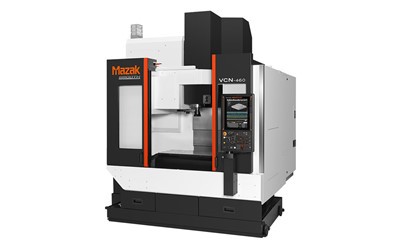
1. Machine Design and Construction
The very foundation of a CMM’s accuracy lies in its design and construction. The materials used play a huge role. For example, granite is a popular choice for the base and bridge of CMMs. Why? Well, granite has low thermal expansion, which means it doesn’t change shape much with temperature variations. This stability is essential for maintaining accurate measurements.
Another aspect of design is the mechanical structure. A well – designed CMM has a rigid frame that can withstand vibrations and external forces. If the frame is wobbly or flexible, even the slightest movement can throw off the measurements. The way the axes are built and aligned is also crucial. The axes need to be perpendicular to each other within very tight tolerances. Any misalignment can lead to errors in the X, Y, and Z coordinates.
2. Probe Technology
The probe is like the CMM’s "finger" that touches the object being measured. Different types of probes are available, each with its own characteristics. Contact probes are the most common. They work by physically touching the object. The accuracy of a contact probe depends on its tip shape and size. A small, well – calibrated tip can measure small features more accurately.
Non – contact probes, such as laser scanners, are also used. They use light to measure the object’s surface without touch. These probes are great for measuring delicate or soft materials. However, they can be affected by factors like the reflectivity of the surface. If the surface is too shiny or too dull, it can cause the laser to scatter or not reflect properly, leading to inaccurate measurements.
3. Environmental Conditions
You might be surprised to learn that the environment can have a big impact on a CMM’s accuracy. Temperature is one of the most significant factors. As I mentioned earlier, materials expand and contract with temperature changes. If the temperature in the room where the CMM is located fluctuates, it can cause the machine and the object being measured to change dimensions. That’s why many CMMs are placed in temperature – controlled rooms.
Humidity is another environmental factor. High humidity can cause corrosion on the machine’s components, especially the metal parts. This corrosion can affect the movement of the axes and the performance of the probes. Dust and dirt can also be a problem. If dust particles get into the moving parts of the CMM, they can cause friction and wear, which can lead to inaccurate measurements.
4. Software and Calibration
The software that runs the CMM is like its brain. It controls the movement of the axes, processes the measurement data, and calculates the results. A good software program can compensate for some of the errors caused by other factors. For example, it can correct for temperature – related expansion and contraction.
Calibration is also essential. A CMM needs to be calibrated regularly to ensure its accuracy. During calibration, the machine is compared to a known standard. Any discrepancies are then corrected. Calibration should be done by a qualified technician using high – precision calibration tools. If the calibration is off, the measurements will be inaccurate.
5. Operator Skill and Training
Last but not least, the operator plays a vital role in the accuracy of a CMM. A skilled operator knows how to properly set up the machine, select the right probes and measurement methods, and interpret the results. They also know how to handle the object being measured to avoid introducing errors.
Training is crucial for operators. They need to understand the principles of CMM operation, the limitations of the machine, and how to troubleshoot common problems. Without proper training, even the most advanced CMM can produce inaccurate results.
So, there you have it! These are the main factors that affect the accuracy of a Coordinate Measuring Machine. As a supplier, I know how important it is to provide high – quality CMMs that can deliver accurate results. We work hard to ensure that our machines are well – designed, use the latest probe technology, and are easy to calibrate.
Horizontal Machining Centers If you’re in the market for a Coordinate Measuring Machine, or if you have any questions about how to improve the accuracy of your existing CMM, don’t hesitate to reach out. We’re here to help you make the right choice and get the most accurate measurements possible. Whether you’re in the automotive industry, aerospace, or any other field that requires precise measurements, we’ve got the solutions for you. Let’s start a conversation and see how we can meet your measurement needs.
References
- Brown, R. A. (2005). Coordinate Measuring Machines: Principles and Applications. Industrial Press.
- Smith, J. K. (2010). Precision Measurement and Calibration: An Introduction. CRC Press.
- Jones, M. L. (2015). Metrology for Manufacturing Engineers. ASME Press.
Hermens Industrial Co., Ltd.
As one of the most professional coordinate measuring machine enterprises in China, we’re featured by quality products and low price. Please rest assured to buy cheap coordinate measuring machine in stock here and get quotation from our factory. We also accept customized orders.
Address: 97/242,Soi6/1,Alley Perfect Place Village, Phase 3 Ladkrabang20/3 Rachathewa,Bangphli Samutprakan, Thailand
E-mail: liu_jincheng@hzhemen.com
WebSite: https://www.hermensindustrial.com/
