What is the bending strength of a Pin Header Female Header Connector?
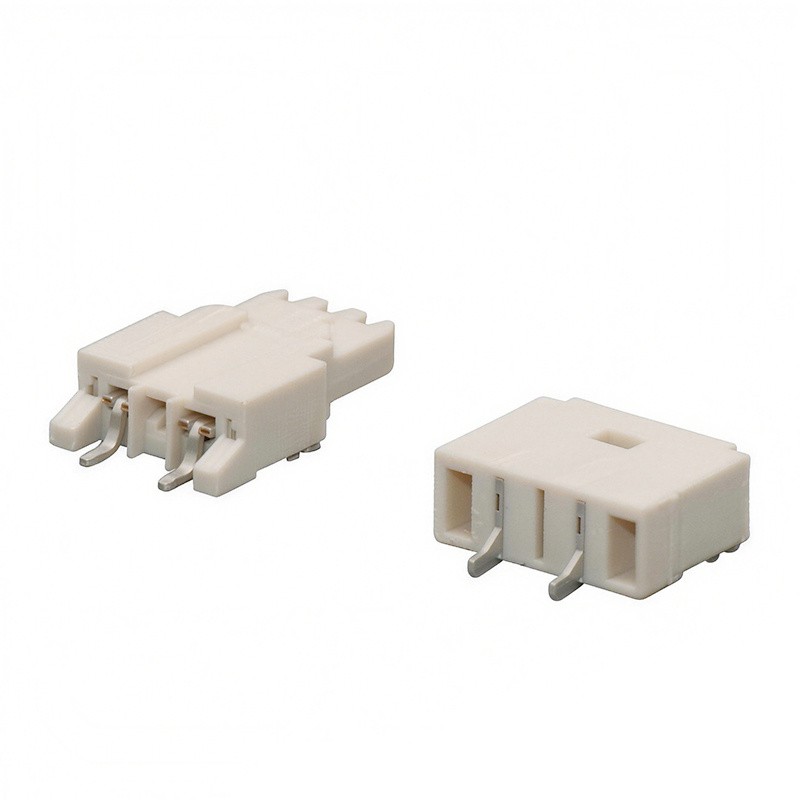
As a supplier of Pin Header and Female Header Connectors, I often encounter inquiries about the technical specifications of our products, especially the bending strength. Understanding the bending strength of these connectors is crucial for both designers and end – users, as it directly impacts the reliability and durability of electronic devices. Pin HeaderFemale Header Connector
1. Definition and Importance of Bending Strength
Bending strength, also known as flexural strength, is the ability of a material or a component to resist deformation when subjected to a bending force. In the context of Pin Header and Female Header Connectors, bending strength refers to the maximum amount of bending force that the pins and the connector body can withstand without permanent deformation or damage.
For electronic devices, these connectors play a vital role in establishing electrical connections between different components. A connector with insufficient bending strength may experience pin bending or breakage during installation, maintenance, or normal use. This can lead to intermittent electrical connections, signal loss, and even complete device failure. Therefore, ensuring an adequate bending strength is essential for the long – term performance of electronic systems.
2. Factors Affecting Bending Strength
2.1 Material Selection
The material used in the manufacturing of Pin Header and Female Header Connectors has a significant impact on their bending strength. Commonly used materials for pins include brass, phosphor bronze, and beryllium copper.
Brass is a popular choice due to its relatively low cost and good electrical conductivity. However, its bending strength is moderate compared to other materials. Phosphor bronze offers better mechanical properties, including higher bending strength and good fatigue resistance. It is often used in applications where the connectors are subjected to repeated bending or vibration. Beryllium copper has the highest strength and excellent electrical conductivity. It is suitable for high – performance applications that require both reliable electrical connections and high bending strength.
The connector body is usually made of plastic materials such as polybutylene terephthalate (PBT), liquid crystal polymer (LCP), or nylon. These plastics provide insulation and mechanical support for the pins. The choice of plastic material affects the overall bending strength of the connector, as well as its chemical resistance and temperature stability.
2.2 Pin Geometry
The geometry of the pins also influences the bending strength. Pins with a larger diameter generally have higher bending strength than those with a smaller diameter. Additionally, the shape of the pin tip and the cross – sectional shape can affect the stress distribution when the pin is bent. For example, pins with a rounded tip may distribute stress more evenly than those with a sharp tip, reducing the risk of stress concentration and premature failure.
The length of the pins is another important factor. Longer pins are more prone to bending, especially if they are not properly supported. Therefore, when designing connectors with long pins, additional support structures or reinforcement may be required to improve the bending strength.
2.3 Manufacturing Process
The manufacturing process can have a significant impact on the bending strength of the connectors. Precision stamping and forming processes are used to create the pins, and the quality of these processes can affect the internal structure and mechanical properties of the pins. For example, improper stamping can cause internal defects or stress concentrations in the pins, reducing their bending strength.
The assembly process of the connector also matters. If the pins are not properly inserted or secured in the connector body, they may be more likely to bend or break under stress. Therefore, strict quality control measures are necessary during the manufacturing and assembly processes to ensure the consistency and reliability of the bending strength.
3. Measuring Bending Strength
The bending strength of Pin Header and Female Header Connectors is typically measured through standardized testing methods. One common method is the three – point bending test, where a specimen of the connector is placed on two supports and a load is applied at the center of the specimen. The load is gradually increased until the specimen fails or reaches a predetermined level of deformation.
The test results are usually expressed in terms of the maximum bending force or the bending stress at the point of failure. These values can be used to compare the bending strength of different connector designs and materials. It is important to note that the actual bending strength of the connector in a real – world application may be affected by factors such as the loading rate, the presence of vibrations, and the environmental conditions.
4. Applications and Bending Strength Requirements
The required bending strength of Pin Header and Female Header Connectors varies depending on the application. In consumer electronics, such as smartphones and laptops, the connectors are usually subjected to relatively low – level bending forces during normal use. Therefore, connectors with moderate bending strength are sufficient for these applications.
In industrial and automotive applications, however, the connectors may be exposed to more severe operating conditions, including high – vibration environments and frequent mating and unmating operations. In these cases, connectors with higher bending strength and better fatigue resistance are required to ensure reliable performance over an extended period.
For example, in automotive engine control units, the connectors need to withstand the vibrations and mechanical stresses generated by the engine. A connector with low bending strength may fail prematurely, leading to engine malfunctions and safety hazards.
5. Our Approach as a Supplier
As a leading supplier of Pin Header and Female Header Connectors, we are committed to providing high – quality products with excellent bending strength. We carefully select the materials for our connectors based on the specific requirements of different applications. Our engineers conduct extensive research and development to optimize the pin geometry and manufacturing processes to improve the bending strength and overall reliability of our products.
We also have a rigorous quality control system in place. Every batch of connectors undergoes comprehensive testing to ensure that they meet or exceed the specified bending strength requirements. This includes both destructive and non – destructive testing methods to detect any potential defects or weaknesses in the connectors.
In addition, we offer customized solutions to our customers. If you have specific bending strength requirements or other unique needs for your application, our technical team can work with you to develop a connector design that meets your exact specifications.
6. Contact Us for Your Connector Needs

If you are in the market for Pin Header and Female Header Connectors with high – quality and reliable bending strength, look no further. Our team of experts is ready to assist you in selecting the right connector for your application. We believe that our products can provide you with the performance and durability you need for your electronic systems.
Wire-to-Wire Connector Whether you are a small – scale manufacturer or a large – scale enterprise, we are committed to providing you with the best service and products. Contact us today to start a discussion about your connector requirements, and let us work together to find the perfect solution for your business.
References
- ASM Handbook Volume 8: Mechanical Testing and Evaluation.
- IPC – TM – 650 Test Methods Manual.
- Connector Handbook, McGraw – Hill.
Wenzhou JKUN Connector Co., Ltd.
As one of the most professional pin headerfemale header connector manufacturers and suppliers in China, we’re featured by quality products and low price. Please rest assured to wholesale bulk customized pin headerfemale header connector from our factory. For quotation and free sample, contact us now.
Address: No.2667, Ningkang East Road, Yueqing City, Zhejiang Province, China
E-mail: sales@cnjkun.com
WebSite: https://www.jkunjcj.com/
